Residential Assisted Living and Small Care Homes: A Family Guide to the House-Sized Alternative
Published on June 10, 2026
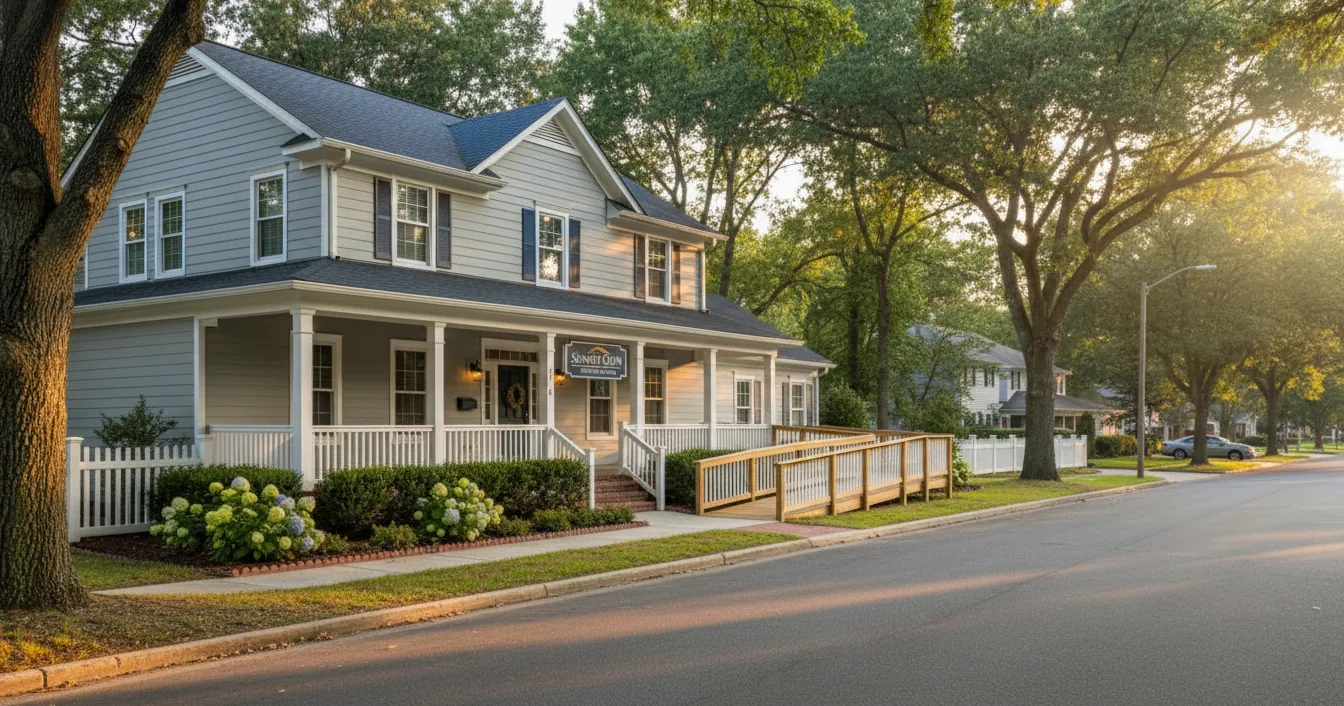
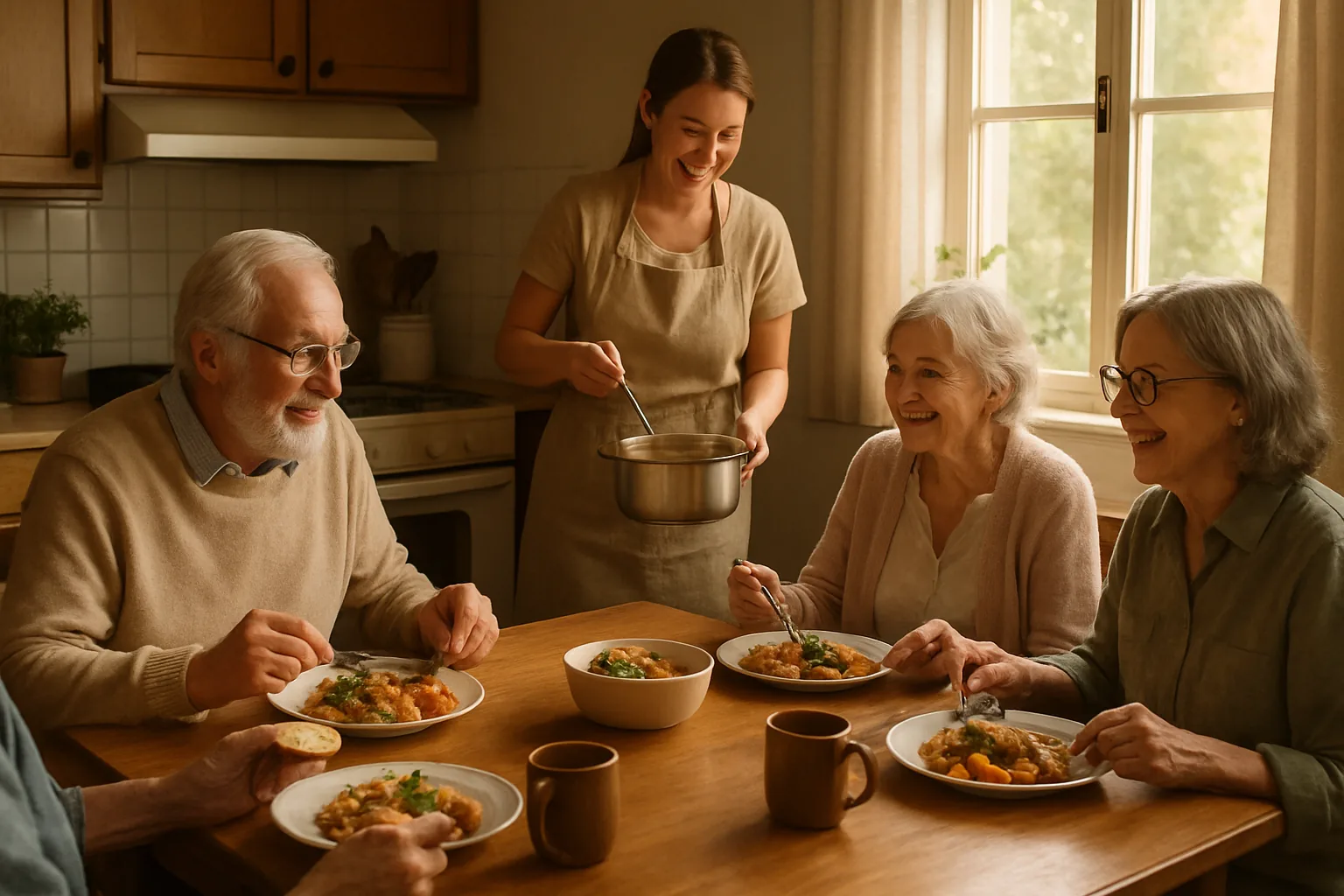
Most senior living tours follow the same script. A receptionist greets you in a lobby, you pass a bistro and a salon, and a marketing director walks you down carpeted corridors lined with apartment doors. Then there is the other kind of tour, the one that ends at a house on an ordinary residential street, where six or eight older adults share a kitchen, a living room, and a backyard, and a caregiver is stirring a pot of soup when you walk in. That second model has a name, residential assisted living, and it is quietly becoming one of the fastest growing corners of senior care.
What a Residential Care Home Actually Is
Residential assisted living goes by many names, but the physical reality is consistent: a small number of seniors, usually between six and sixteen, living together in a single-family house rather than an apartment building. Some operators buy an existing home in a quiet neighborhood and convert it, widening doorways, adding grab bars, and making bathrooms wheelchair accessible. Others build purpose-designed homes that look residential from the street but are laid out for care from the studs in. Residents have their own bedroom, private or shared depending on the home and the price, and everyone gathers in common kitchen, dining, and living spaces. Meals are cooked on site, often in a kitchen residents can see and smell. The premise is simple. Instead of bringing people into an institution, the model brings care into something that already feels like a home.
How Small Homes Compare to Big Communities
The trade-offs between a six-bed house and a community of eighty to two hundred beds fall along four lines: staffing, social life, clinical depth, and cost.
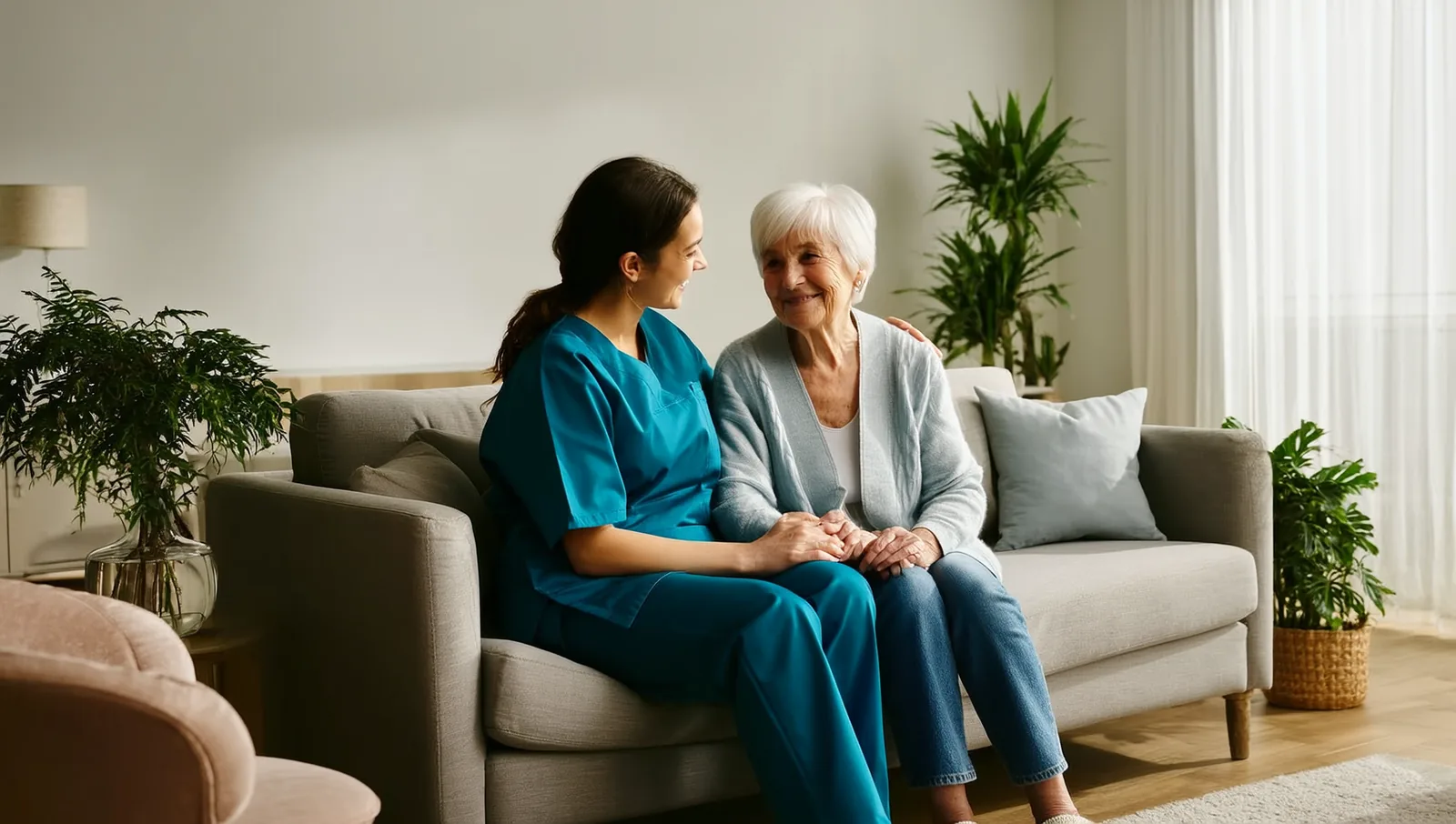
Staffing is the clearest advantage of the small home. A large assisted living community may run one caregiver for every fifteen residents or more during a shift. Small homes routinely do far better. Operators in the sector describe ratios from one staffer for four residents up to one for eight, and some flex higher when residents need more help, putting three caregivers on a house of six during the busiest hours. Fewer residents per caregiver tends to mean faster help, more consistent faces, and staff who know each resident’s routine by heart.
Social life cuts both ways. A big community offers a fuller calendar: fitness classes, lectures, outings, a dining room with dozens of tables, and a larger pool of peers to befriend. A house of eight cannot match that variety. For a gregarious, active senior, the larger community may simply be more fun. For someone who finds crowds and long corridors overwhelming, especially a person with cognitive decline, the quiet of a small home and the same few faces every day can be far less distressing. Our guide to reading a community for genuine memory care capability is worth pairing with a small-home tour when dementia is part of the picture.
Clinical capability is where families have to look hardest. Large communities often keep nurses on site for many hours a day and run clear systems for medication management and emergencies. A small home may have an excellent caregiver ratio but only a visiting nurse, or none at all, with medications overseen by trained aides under a delegating nurse. Neither model is automatically safer. What matters is matching the home’s real clinical depth to your parent’s medical needs, both today and as they change.
Cost defies the easy assumption that smaller means cheaper. Nationally, the median for a care home runs around $4,500 a month, modestly below the roughly $5,400 median for assisted living, and a private room in a residential care home now sits near $5,500. In practice, a shared room in a board and care home can be one of the most affordable licensed options in a region, while a private room in a boutique small home with a rich staffing ratio can cost as much as or more than a big-brand community. Price tracks room type, location, and care level far more than building size.
The Licensing Maze: A Different Name in Every State
Here is what trips families up most. The house-sized care model is licensed and regulated state by state, and almost every state calls it something different. In California these are Residential Care Facilities for the Elderly, or RCFEs, and the small ones are widely known as board and care homes. Washington and a number of other states license adult family homes for up to six residents. Arizona separates an assisted living home of ten or fewer beds from a larger assisted living center. Elsewhere you will hear personal care home, adult care home, group home, or simply residential care. The label changes, the bed limits change, the staffing and training rules change, and so do inspection standards.
Because the rules, costs, and even availability vary so much from one state to the next, the most useful early step is to learn what your own state calls these homes and which agency licenses them. Your state’s long-term care ombudsman and Area Agency on Aging can point you to the public inspection records, the same accountability tool that applies to large communities. The contract you eventually sign deserves equal scrutiny, too; what every family should know about senior living contracts and resident rights applies fully to small homes.
Why the Model Is Growing
Three forces are pushing residential assisted living from a cottage industry toward the mainstream.
The first is demand. The boomer generation is aging into care just as many regions face a shortage of beds, and a small home can open far faster than a large community can be built. British Columbia’s Vancouver Coastal Health has leaned into exactly this, launching a strategy to convert ordinary detached houses into licensed small care homes of up to ten residents, with three pilot homes opening in 2026 and a goal of 200 beds by 2029. The health authority frames it as a quicker, less disruptive way to add capacity while keeping seniors close to their families, and argues that smaller homes build stronger relationships between staff and residents.
The second is consolidation. What began as a mom-and-pop business, single operators running one or two houses, is now attracting companies that want to scale it. In early 2026 Majestic Residences acquired Avendelle Senior Living, adding seventeen operating homes plus several more in development, and becoming the largest residential assisted living provider in North Carolina and the second largest franchised operator in the country. Majestic has openly described its approach as a “McDonald’s model” of small-home franchising. There were already more than 32,000 residential care communities in the United States as of 2022, and that base is now both consolidating and expanding.
The third is taste. Families increasingly want a home-like setting rather than an institutional one, and operators are building boutique small homes to meet that preference at both the middle-market and luxury ends.
Red Flags With an Independent Operator
A national brand brings standardized training, financial backing, and a corporate office to call when something goes wrong. Many of the best small homes have none of that and are wonderful anyway. But the absence of a brand means you have to do the diligence the brand would otherwise do. A few things to probe:
- Single points of failure. Ask who covers a shift when the regular caregiver is sick. A home with one owner-operator and no backup staff can leave residents thinly covered on a bad day.
- Financial stability. A small operator running on thin margins can close abruptly. Ask how long the home has operated and, politely, how steady the business is.
- Clinical backup. Find out exactly who manages medications, who the delegating or visiting nurse is, and what happens in a medical emergency at 2 a.m.
- Care that outgrows the home. Ask what level of decline the home can handle and what would trigger a forced move. A home that cannot manage two-person transfers or advancing dementia may discharge your parent just when moving is hardest.
- The licensing record. Pull the state inspection history. Past violations, and how the operator fixed them, tell you more than any brochure.
- Owner burnout. Running a care home is relentless work. An exhausted owner-operator is a genuine risk to quality, so notice how the people in charge seem to be holding up.

Is a Small Home Right for Your Parent?
The small home shines for a senior who values quiet, consistency, and a family-scale setting, and whose care needs a strong caregiver ratio can meet. It can be the gentlest option through early and middle dementia. It is less suited to someone who craves a big social scene and a packed activity calendar, or whose medical needs call for skilled nursing on site. As with every senior living decision, the right answer turns on a clear-eyed read of care needs now and where they are heading; our framework for choosing between independent and assisted living and the broader stay-at-home versus move decision are good companions to this guide.
One practical warning. Because referral and placement services often do not list small homes at all (the houses that pay no commission stay invisible on those lists), you may have to find these homes yourself. How free placement services actually work explains why. And because the stakes are high and the rules are local, involve a certified senior care advisor or an elder law attorney before you sign anything, and treat any cost or eligibility figure here as a starting point to verify in your own state rather than as legal or financial advice.
Further reading (sources)
- Senior Housing News on the 2026 growth of small-home residential assisted living
- Senior Housing News for Majestic Residences scaling up by acquiring Avendelle’s 17 homes
- McKnight’s Senior Living with how the deal joined two franchise-focused small-home companies
- Daily Hive on Vancouver Coastal Health converting houses into small care homes
- National Institute on Aging for how board and care homes compare with assisted living and nursing homes
- U.S. News on how group homes compare on cost, care needs, and staffing
- Administration for Community Living with what residential care costs and which sources pay for it