The Complete Guide to Memory Care: Choosing Dementia-Friendly Senior Living
Published on June 30, 2026
When the Search Turns to Memory Care
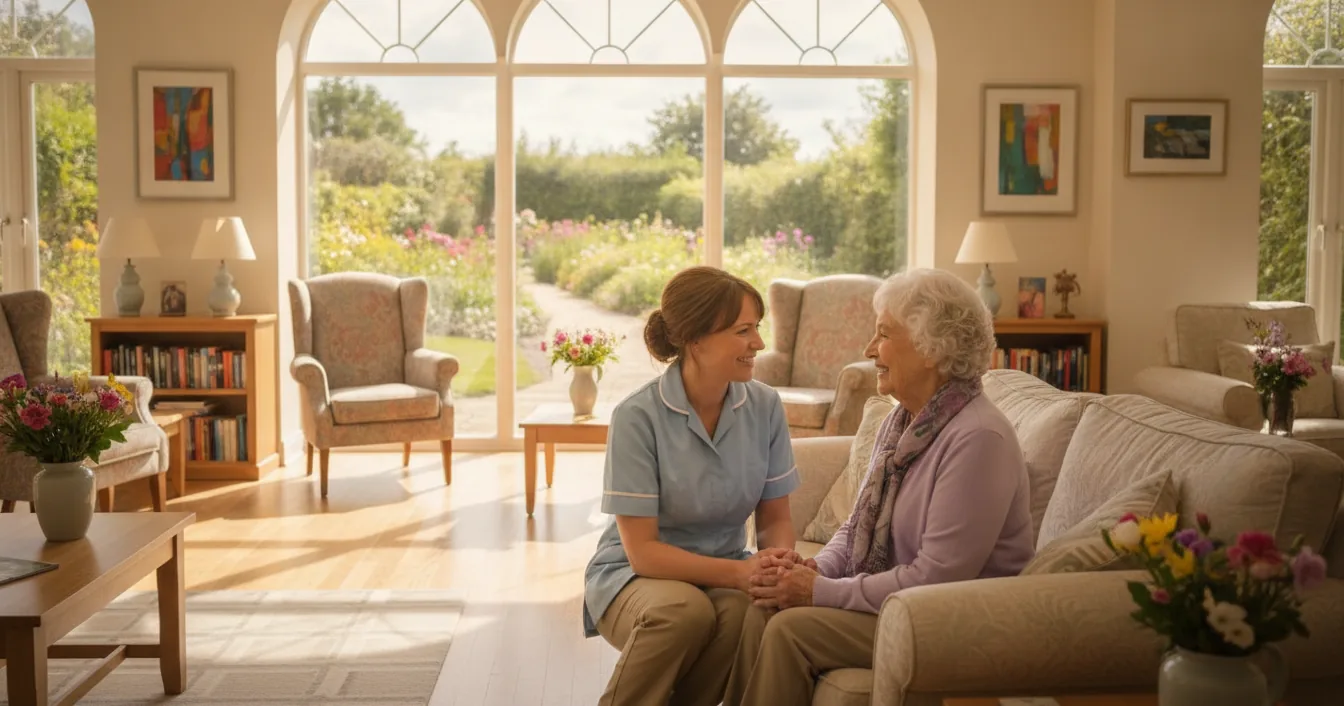
A dementia diagnosis reorders a family’s world. After the appointments and the hard conversations comes a practical question that can feel overwhelming: where will Mom or Dad actually live, and who is equipped to care for them well as the disease progresses? Memory care is the answer most families arrive at, yet very few know what genuinely separates a strong memory care community from a standard building with a locked hallway and a reassuring brochure.
This guide is for families who have decided, or are close to deciding, that dedicated memory care is the right setting. (If you are not yet sure your parent needs it, our companion piece on whether a standard community can handle early cognitive decline is the better place to start.) Here we cover what memory care really is, the standards the best communities follow, what next-generation dementia care looks like in 2026, how costs and licensing differ, and a touring checklist built specifically for evaluating a dementia-friendly home.
What Memory Care Actually Is
Memory care is a specialized level of senior living designed for people living with Alzheimer’s disease and other forms of dementia. It shares a foundation with assisted living (help with bathing, dressing, medication, and meals) but layers specialized elements on top: a secured environment that prevents unsafe wandering, staff trained specifically in dementia, higher staffing levels, programming built around cognitive ability rather than against it, and a physical space engineered to reduce confusion and distress.
The distinction that trips up the most families is between a marketing label and a licensed level of care. A “memory neighborhood” or “reflections wing” inside a standard assisted living community is not automatically the same thing as licensed memory care. In most states, true memory care is a regulated category carrying requirements that ordinary assisted living does not have to meet. So your first question on any tour should be direct: is this a separately licensed memory care unit, and what does that license require that standard assisted living does not?
The Standards That Separate Real Memory Care
The best memory care communities do not improvise. They follow recognized frameworks, the most influential being the Alzheimer’s Association’s Dementia Care Practice Recommendations. These cover person-centered care, thoughtful assessment and care planning, managing behavioral symptoms without defaulting to medication, supportive physical environments, and properly trained, consistently assigned staff.
Training is where good intentions meet reality. Ask whether caregivers complete a recognized dementia curriculum such as the Alzheimer’s Association’s essentiALZ certification, how many hours new staff finish before working alone, and whether that training is refreshed or treated as a one-time orientation. The industry is moving in this direction. In 2026, the operator Vantage Point partnered with the Alzheimer’s Association to roll out new memory care standards and staff training across its communities, a sign that formalized, association-backed standards are becoming a competitive expectation rather than a bonus. Third-party benchmarks are emerging too: Discovery Senior Living was ranked first in the nation for customer satisfaction among assisted living and memory care providers in the J.D. Power 2025 U.S. Senior Living Satisfaction Study.
What “Next-Gen” Memory Care Looks Like in 2026
Memory care has shifted from a containment mindset to an engagement one. Industry leaders now describe implementing next-generation memory care practices as one of the sector’s biggest opportunities, and those practices share a common thread: meet the person where they are.
In practice that means small “household” or “neighborhood” models, where a dozen or so residents share a homelike space rather than a long institutional corridor. It means Montessori-inspired activities that give residents purposeful tasks, music and art therapy, and multisensory spaces that ease agitation. It means handling difficult behavior through environment and relationship first and medication last, the reverse of the old reflex to sedate. Technology plays a quiet supporting role, with discreet wander-management wearables, fall detection, and monitoring that protects residents without making the place feel like a hospital.

A wave of purpose-built communities is being designed around these ideas. Clearwater Living, in a joint venture with Black Equities, opened The Leonard on Beverly, a dedicated luxury memory care community in Los Angeles, part of a broader surge in new dementia-focused construction. That surge is no accident. CoStar reports that the country’s rising dementia rate is driving demand to expand and retrofit senior housing, which means more options for families but also more variation in quality to sort through.
Dementia-Friendly Design: What to Look For
Physical design is one of the clearest signals of whether a community truly understands dementia. Walk the space with these features in mind.
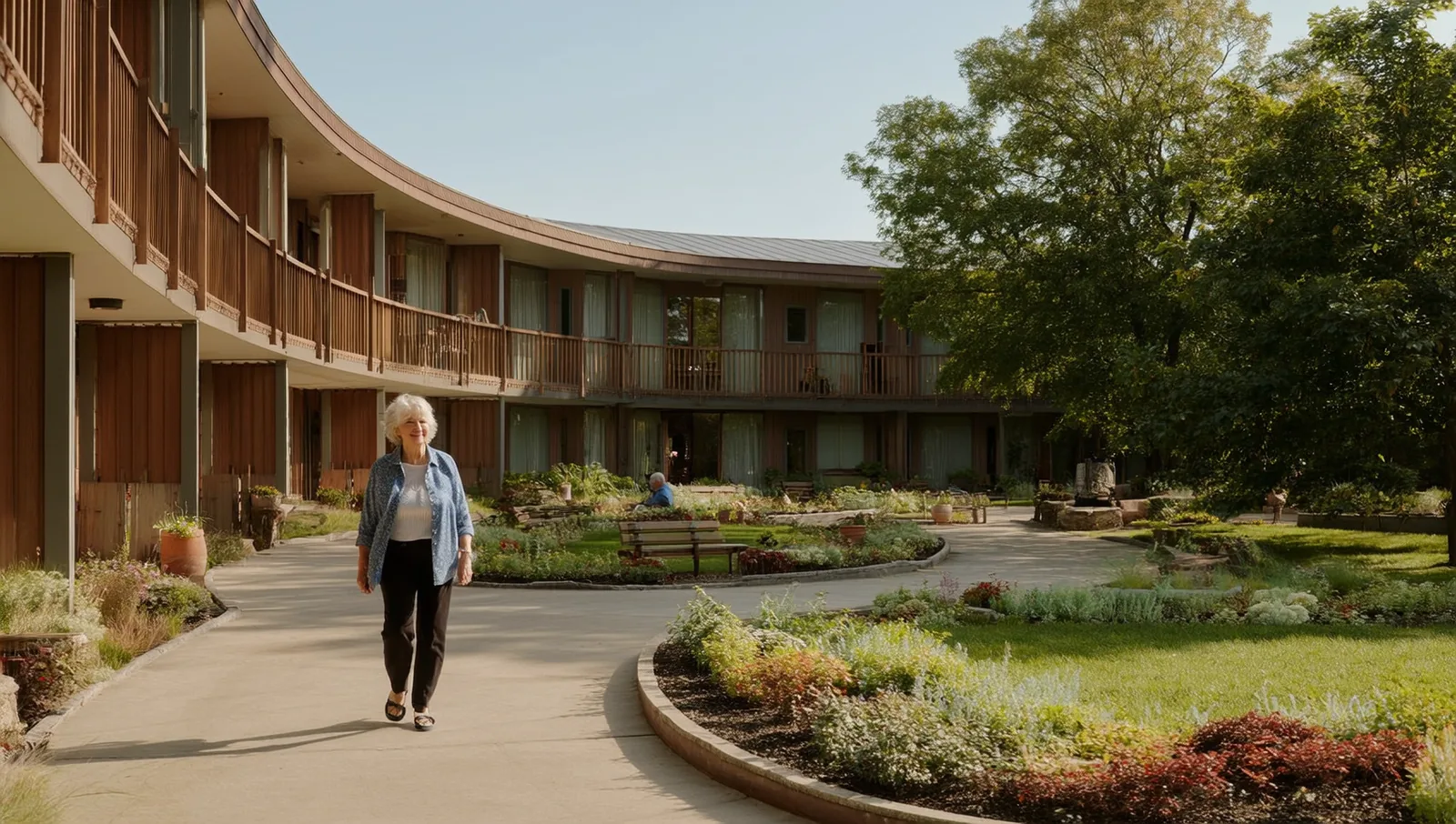
- Safe movement. Look for circular or looped walking paths with no frustrating dead ends, and a secured outdoor courtyard or garden so residents can be outside without elopement risk.
- Visual clarity. Even, glare-free lighting reduces the shadows that can frighten or confuse. Strong contrast helps too, a dark toilet seat against a light floor, or a colored plate on a white tablecloth, so objects are easy to see and use.
- Calm surfaces. Busy carpet patterns can read as holes or obstacles to a dementia brain. Good communities choose plain flooring and quiet, low-stimulation finishes.
- Wayfinding. Memory boxes outside each room, holding familiar photos and objects, help residents recognize their own door. Clear sightlines to dining and activity areas reduce disorientation.
- Human scale. Smaller groupings, homelike furnishings, and manageable noise levels feel less institutional and tend to lower anxiety.
If a building is simply a standard assisted living floor with a keypad on the door, the design alone will tell you.
How Costs and Licensing Differ
Memory care costs more than assisted living, and you should expect the difference up front. National cost-of-care surveys consistently place memory care above assisted living, often by 20 to 30 percent, because of the added staffing, security, and programming. The dollars behind that premium swing enormously by state and even by metro area, so treat any national figure as a rough anchor and never a quote. (Our guide to how families actually pay for senior living walks through long-term care insurance, VA benefits, Medicaid, and the other ways families fund this level of care.)
Licensing varies just as much. Because there is no federal assisted living standard, each state defines what a memory care or “Alzheimer’s special care unit” must provide, and many require a formal disclosure spelling out the community’s staffing, training, security, and philosophy of care. Ask for that disclosure document and read it closely. This is also the moment to understand the contract: what triggers a move to a higher level of care, and under what circumstances the community can ask a resident to leave. Knowing your protections before you sign is exactly why it helps to understand resident rights and admission agreements in advance.
Your Dementia-Friendly Touring Checklist
Bring this to every visit, and tour more than one community so you have something to compare.
- Security and egress. Are exits secured or alarmed? What is the written protocol when a resident approaches a door or is found outside?
- Staffing and training. What is the staff-to-resident ratio by day and overnight? What dementia training do caregivers complete, and what is staff turnover?
- Programming. Are activities tailored to ability and offered throughout the day, or is the television the default? Ask to observe one.
- Dining. Are there contrasting plates, finger foods, and unhurried mealtimes for residents who struggle with utensils or with sitting still?
- Behavior philosophy. How does the community handle agitation or aggression, and how often are antipsychotic medications used?
- Progression. Can the community care for late-stage dementia and coordinate end-of-life care on site, or will advancing needs force your parent into another disruptive move?
- What you see. Are residents clean, engaged, and treated warmly by staff who clearly know their names?
Choosing With Clear Eyes
A good memory care community can give a person with dementia more dignity, safety, and genuine moments of joy than most families can provide at home once the disease advances. The hard part is telling the genuinely capable communities from the ones that have learned the vocabulary without building the substance. Ask to see the standards, the training, the design, and the daily life, not just the lobby.

Move sooner rather than later if you can. The same dementia surge expanding supply is also filling the best communities, and waitlists are lengthening across the senior housing market. If you are only beginning and feel unsure where to start, our first-time family’s guide to starting a senior living search lays out the first steps in order. Finally, because the stakes are so high, lean on professionals: a certified senior care advisor or geriatric care manager to assess a community’s real capabilities, and an elder law attorney for the contract and the financial plan. Nothing here is legal or financial advice, and the right choice depends on details only qualified advisors can weigh for your family. What you can do now is tour with your eyes open and a checklist in hand.
Further reading (sources)
- Senior Housing News on Vantage Point’s new memory care standards and Alzheimer’s Association training
- Senior Housing News for the big opportunity in next-generation memory care practices
- Yield PRO with Clearwater Living’s new Los Angeles memory care community, The Leonard on Beverly
- Newsfile on Discovery Senior Living’s top J.D. Power 2025 satisfaction ranking
- CoStar for how the coming dementia surge is reshaping senior housing demand
- Alzheimer’s Association with its essentiALZ dementia care training and certification standard
- Genworth and CareScout on the cost of memory care, assisted living, and long-term care
- National Institute on Aging for how to choose a long-term care facility and what to ask